This is a native plant, but it is not available in the 2026 Wild Ones plant sale.
Tap card to flip
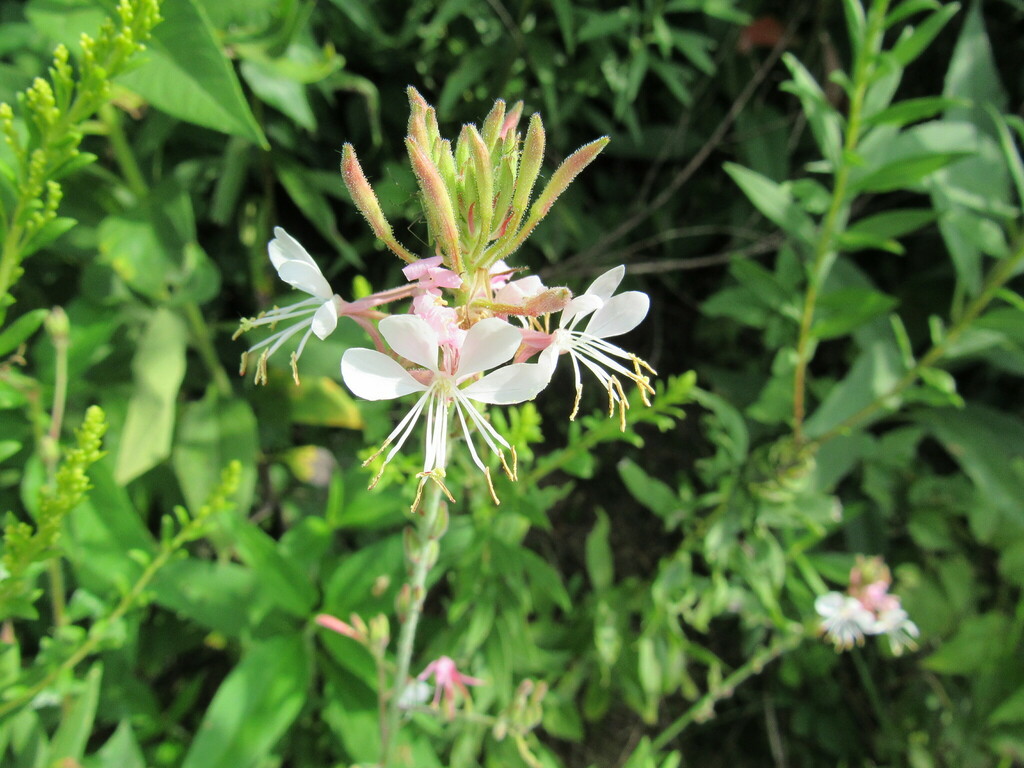


Biennial Gaura
Gaura biennis
PerennialBiennial Gaura
Gaura biennis
Tap to flip backGrowing Conditions
 Light
Sun – Part Shade
Light
Sun – Part Shade
 Water
Dry – Medium
Water
Dry – Medium
 Soil
Loam, Sandy
Soil
Loam, Sandy
 Size
4-6'
Size
4-6'
 Bloom
White to Pink, Jul–Oct
Bloom
White to Pink, Jul–Oct
Why Grow It

Pollinator Magnet
Attracts many types of pollinators

Self-Seeding
Returns each year from dropped seeds

Late Bloomer
Provides nectar when others have faded
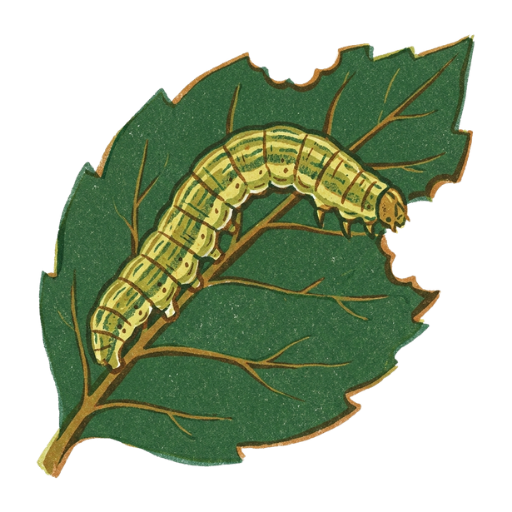
Caterpillar Host
Feeds caterpillars of native moths & butterflies
Did You Know?
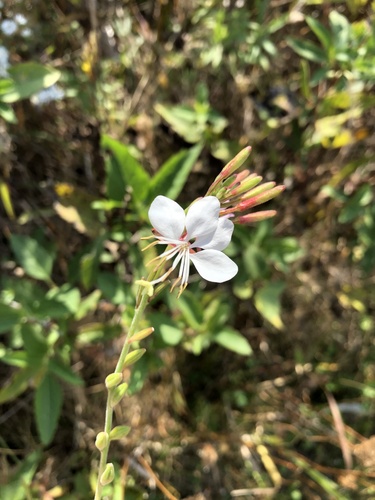
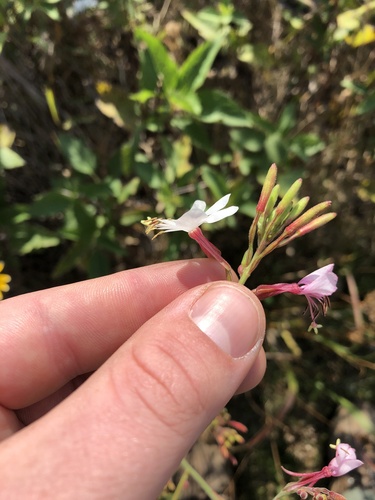
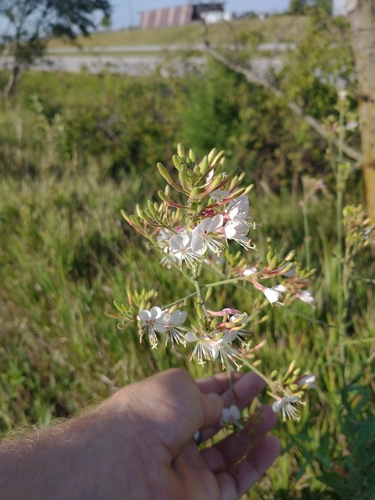
Flowers open in the evening and fade from white to pink as they age, sometimes turning deep reddish-pink.
Larvae of the Gaura Moth and Primrose Moth feed on the leaves and seeds, making it an important caterpillar host plant.
The plant puts on 4-6 feet of growth in its second year, then its fragile stems sway with even a gentle breeze to help scatter seeds.
Wildlife Value
🐝
Long-tongued Bees
Primary pollinators of delicate pink-white flowers
🦋
Gaura Moth
Larvae feed on leaves and developing seeds
🐦
Songbirds
Small birds eat seeds from dried stalks
Good Companions
🌾 Switchgrass
💜 Wild Bergamot
🌼 Black-eyed Susan
🌸 Purple Coneflower
Planting Guide
- Sow seed in fall on well-drained soil in full sun.
- Biennial: first-year rosette, second-year flowers at 4-6 ft.
- Allow plants to self-sow for a persistent colony.
Plant Details
Made with ♥ by Lu Li